






Editorial guidance, education, and product context from Pure For Men.
By the Pure for Men Editorial Team. Updated June 2026.
You added psyllium to make prep more predictable. A friend swore by it, or you read that fiber bulks things up and makes cleanup faster. Now, a few days in, you feel gassy, distended, and weirdly puffy, and you are quietly wondering if you broke something. You did not.
This is one of the most common experiences people have when they begin a fiber supplement, and it is almost always temporary. In fact, gas and bloating are the most common side effects of psyllium. The good news is that you can usually fix it with two simple adjustments: how much you take and how much water you drink with it.
In this guide we will explain why fiber causes bloating in the first place, walk you through an exact ramp-up and water protocol to stop it, and give you a realistic sense of when it passes. Here is the short version worth remembering:
"Psyllium bloating is almost always a sign your dose ramped up faster than your gut adjusted, not a sign something is wrong."
Quick Answer
Quick answer: Starting at a low dose, increasing slowly over one to two weeks, and drinking enough water (at least 8 to 16 oz per dose) stops most psyllium bloating and gas.

A fresh fruit smoothie, an easy way to take fiber powder
Mild bloating usually subsides after a few days as your digestive system adjusts to the added fiber. It also helps to know that psyllium is one of the gentler soluble fibers, because research shows it is only slowly fermented in the gut, which means it produces less gas than many other fibers. The rest of this guide explains the why and the exact protocol so you can get the prep benefits without the discomfort. If you want a single-ingredient starting point, our Daily Psyllium Fiber is a straightforward entry to the ramp.
Why Psyllium Causes Bloating and Gas
Understand what psyllium does inside your gut and the fix becomes obvious.
What psyllium is and how it works
Psyllium husk is a type of soluble fiber from the Plantago ovata plant that forms a gel-like substance when it mixes with water. That gel is the whole point. When psyllium soaks up water in the gut, it adds bulk and makes bowel movements more consistent and easier to pass, which is exactly why it works as a bulk-forming laxative. For prep, that soluble fiber bulk formation is what makes cleanup more predictable and less of a guessing game.
That bulking action is powerful. Psyllium has an unusually high water-holding capacity, soaking up many times its weight in liquid as it forms its gel. That is exactly why it works so well, and why water intake matters so much.
The two main causes of bloating
When people feel bloated on psyllium, the cause almost always falls into one of two buckets:
- A sudden fiber increase. When you add a lot of fiber quickly, your gut has to adapt. Bloating and stomach cramps are typical at the beginning of use because of the increased proportion of fiber being digested in the intestine, and they usually settle after a few days.
- Fermentation and gas. Gut bacteria ferment fiber, and fermentation produces gas. The faster you ramp and the more fermentable the fiber, the more gas you get early on.
Why psyllium is gentler than most fibers
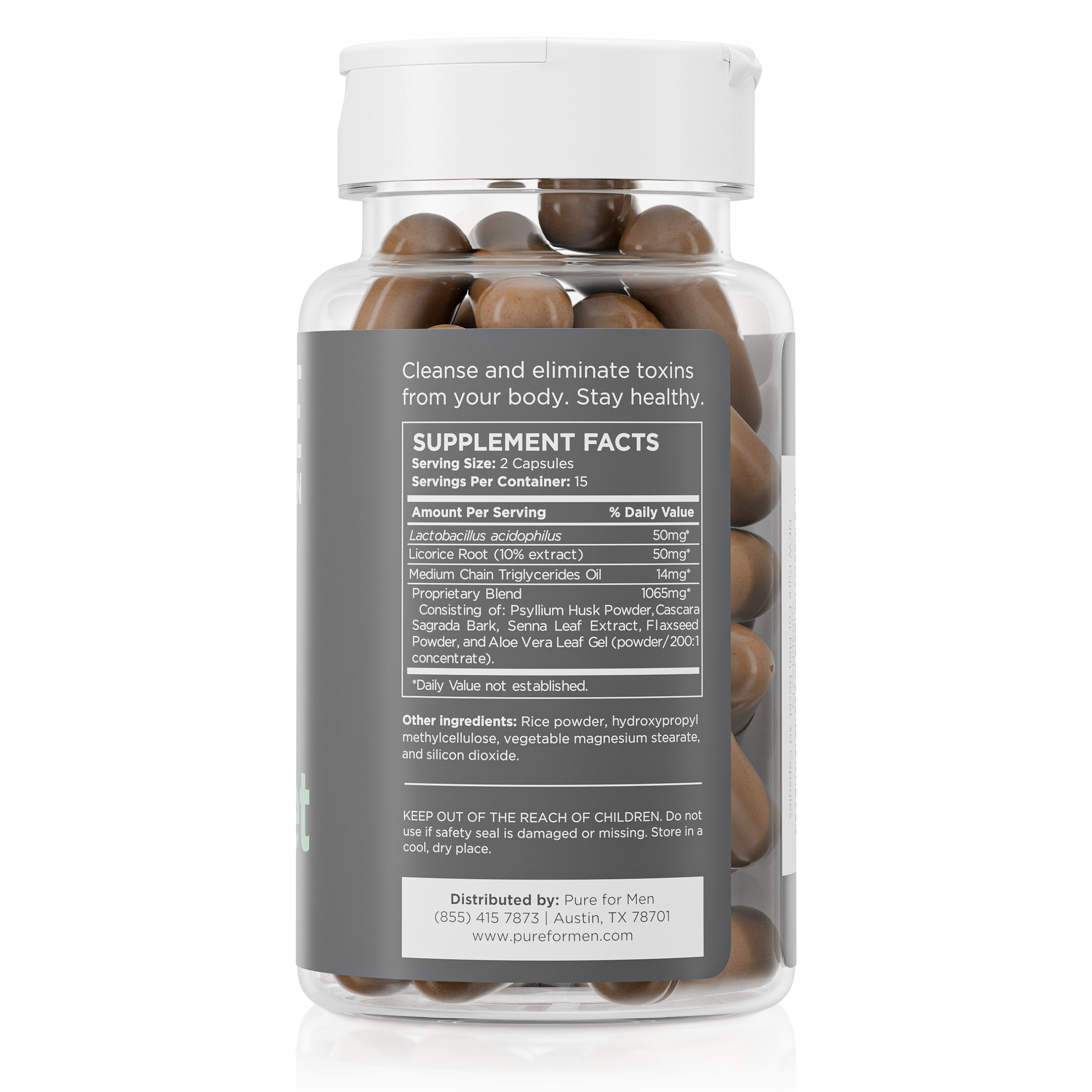
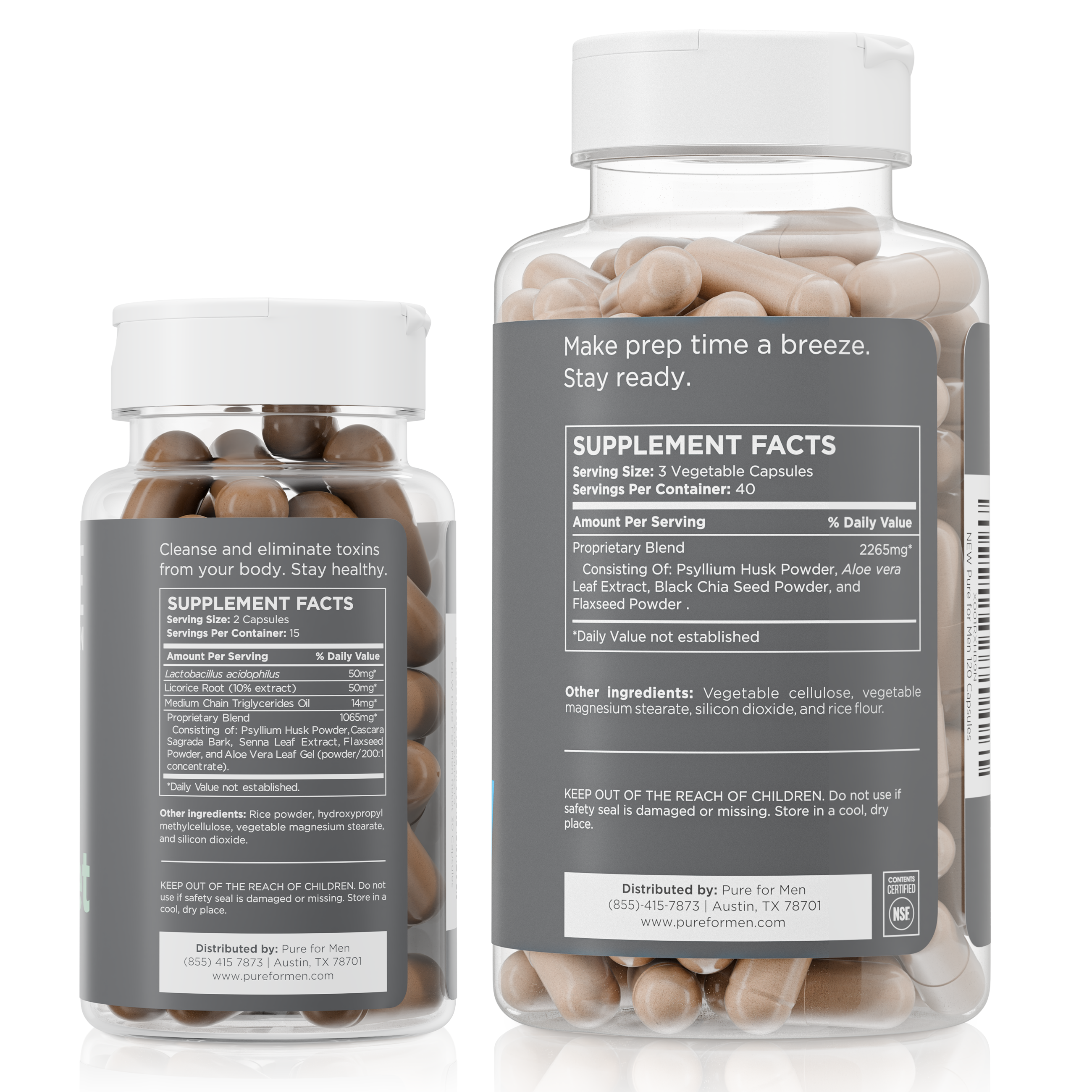
Here is the reassuring part. Not all fibers behave the same way. Psyllium is fermented slowly, so it produces less gas than highly fermentable fibers like inulin. One study found that psyllium produces an increase in colonic volumes without increasing colonic gas or breath hydrogen. The same research showed that co-administering psyllium with inulin reduced peak breath hydrogen in people with IBS. Translation: psyllium is one of the better-tolerated fibers for the prep use case, especially compared to gummy fiber brands that often rely on more fermentable ingredients. Our Stay Ready Fiber Capsules use a psyllium-forward blend for exactly this reason.
How to Stop Bloating From Fiber: The Ramp-Up Protocol
The fix for psyllium bloating is not to quit. It is to ramp slowly and hydrate properly. Think of it as training your gut, not shocking it.
Step 1: Start low
The general recommendation is to start with a small dose and gradually increase. If a serving is a few grams, begin with the lowest amount on the label rather than the full dose. A capsule format like our Stay Ready Fiber 60 Capsule bottle makes this easy because you control exactly how many capsules you take. If you prefer mixing, the Stay Ready Fiber Powder lets you measure a smaller scoop at first.
Step 2: Increase slowly over one to two weeks
Give your gut time to adjust. Add one increment every few days rather than jumping straight to a full serving. A simple ramp looks like this:
- Days 1 to 3: Take the lowest dose once daily with a full glass of water.
- Days 4 to 7: If symptoms are mild or gone, move to the lowest dose twice daily.
- Days 8 to 14: Build toward your target serving, adding small increments and holding at any step that causes discomfort.
If bloating flares at any stage, do not push forward. Hold at the current dose for a few extra days until your gut catches up, then continue. There is no prize for rushing.
Step 3: Drink enough water with every dose
This step is non-negotiable, and it is where most people go wrong. Because psyllium binds so much liquid, it has to be taken with enough water. Without enough fluid, the fiber can clump together and pull water from the stool, causing hardening, constipation, cramps, and gas, the exact discomfort you are trying to avoid.
Aim for at least 8 to 16 oz of water with each dose, and keep sipping throughout the day. The standard guidance pairs each serving of psyllium with a large glass of water. If you are using powder, mix it and drink it promptly before it thickens, then follow with more water.
A few extra tips that help
- Take psyllium at consistent times each day so your gut develops a rhythm
- Pair it with a balanced diet rather than a sudden total-fiber spike from multiple sources at once
- Stay active; gentle movement and walking help gas move through
- Be patient through the first week, which is usually the worst of it
When Does Psyllium Bloating Go Away?
The question everyone asks is simply, when does this stop. For most people, the answer is encouraging.
The typical timeline
Mild bloating during the first few days is normal as the body adjusts, and it usually improves when taken with enough water and started at a low dose. The digestive system generally gets used to it after a few days and the symptoms subside. If you ramp gradually over one to two weeks, you may barely notice any bloating at all.
It is also worth keeping the scale of the issue in perspective. According to data cited by Healthline, the UK's National Health Service reports that about 1 in 100 people experience gas and bloating with psyllium husk supplements. For most users, the early adjustment period is brief and manageable.
When to slow down or check in
If bloating is severe, persistent beyond a couple of weeks, or accompanied by symptoms that worry you, slow your ramp and talk to a clinician. Also note timing with your medications: psyllium can interfere with how some medications are absorbed, so space it at least 2 hours apart from them. A quick conversation with your pharmacist clears up any concerns here.
Building a Prep Routine That Minimizes Gas
Fiber does a lot of the heavy lifting in a predictable prep routine, but it works alongside everything else rather than replacing it. Most people still douche, and that is fine. Fiber makes cleanup more consistent and cuts how often you feel you need a deep clean. Building the rest of your routine thoughtfully keeps bloating in check too.
Pick the format that fits your gut and your life
Format matters more than people expect. Some find capsules gentler because the dose is easy to control, while others prefer the flexibility of powder.
- Capsules for precise, travel-friendly dosing, like our Stay Ready Fiber Capsules
- Powder for adjustable scoops and easy water pairing, such as Stay Ready Fiber Powder
- Single-ingredient psyllium as a simple starting point with Daily Psyllium Fiber
- Higher-strength options once your gut is adjusted, like Extra Strength Stay Ready Fiber
If you want a guided starting kit, the New You Bundle and the Healthy You Bundle pair fiber with supporting products, or you can build your bundle to match your routine. Larger users can step up to Stay Ready Fiber Bundles or the XL capsules once the ramp is complete.
Support the rest of your routine
A calm, predictable prep routine is about more than fiber. The right tools make the whole experience cleaner and more comfortable, which takes the edge off the anxiety.
- A gentle external clean with our Stay Ready Wipes or a quick rinse using the bidet
- Skin comfort and soothing with Bum Balm and the Body Bar
- Exfoliation with the Bum & Body Scrub
- The right glide with water-based lube or silicone-based lube
- Daily wellness support from a Stay Ready Multivitamin and an occasional Reset
For controlled rinsing, some prefer the Bum Bulb, and you can even make your order carbon neutral. If you are shopping for a partner, our gift cards keep it simple.
Frequently Asked Questions
Is psyllium bloating a sign something is wrong?
Usually not. Bloating and gas are the most common, and typically temporary, side effects as your gut adjusts to added fiber. It usually subsides within a few days when you start low and drink enough water.
How do I stop gas from fiber supplements?
Start at a low dose, increase slowly over one to two weeks, and drink at least 8 to 16 oz of water with every serving. Psyllium gas almost always eases once your gut adapts to the gradual increase.
Does psyllium cause more or less gas than other fibers?
Less than many. Research shows psyllium is only slowly fermented and increases colonic volume without significantly increasing gas, making it gentler than highly fermentable fibers like inulin found in some gummy fiber brands.
How much water should I drink with psyllium?
At least a large glass (8 to 16 oz) per dose, plus steady hydration through the day. Too little water lets psyllium clump and harden stool, which causes the very cramping and bloating you want to avoid.
How long until psyllium bloating goes away?
For most people, a few days to about two weeks. A slow, gradual ramp often prevents noticeable bloating altogether.
Getting Past the Bloat
Psyllium bloating is common, usually mild, and almost always temporary. It is your gut adjusting to more fiber, not a sign that something is wrong. Start low, build up over one to two weeks, and pair every dose with plenty of water, and you will get the predictable, lower-anxiety prep routine you were after without the discomfort. A psyllium-forward blend designed for this use case, like our Stay Ready Fiber Capsules, makes the ramp simple and the dosing precise. You can also keep a few Ready Rings or a Stay Ready Key Chain on hand as small reminders to stay consistent.
These statements have not been evaluated by the Food and Drug Administration. This product is not intended to diagnose, treat, cure, or prevent any disease. This article is for educational purposes and is not medical advice. Consult a qualified healthcare provider with questions about your health or medications.

→ Stay Ready Fiber Capsules by Pure for Men
Tap to view Stay Ready Fiber Capsules on pureformen.com
Build a routine that fits your life.
Explore Pure for Men essentials designed to support cleaner, more confident routines.
Shop essentials